
Datong Ancient City — The Walled City Where 600 Years of China Meet in Four Crossroads
Datong, Shanxi, China | 3.28 km² | 7.24 km of Ming Dynasty Walls | Tang-Song Layout, Ming Soul
There’s a kind of city that museums try to recreate with dioramas and audio guides. Then there’s Datong — where you can simply walk in.
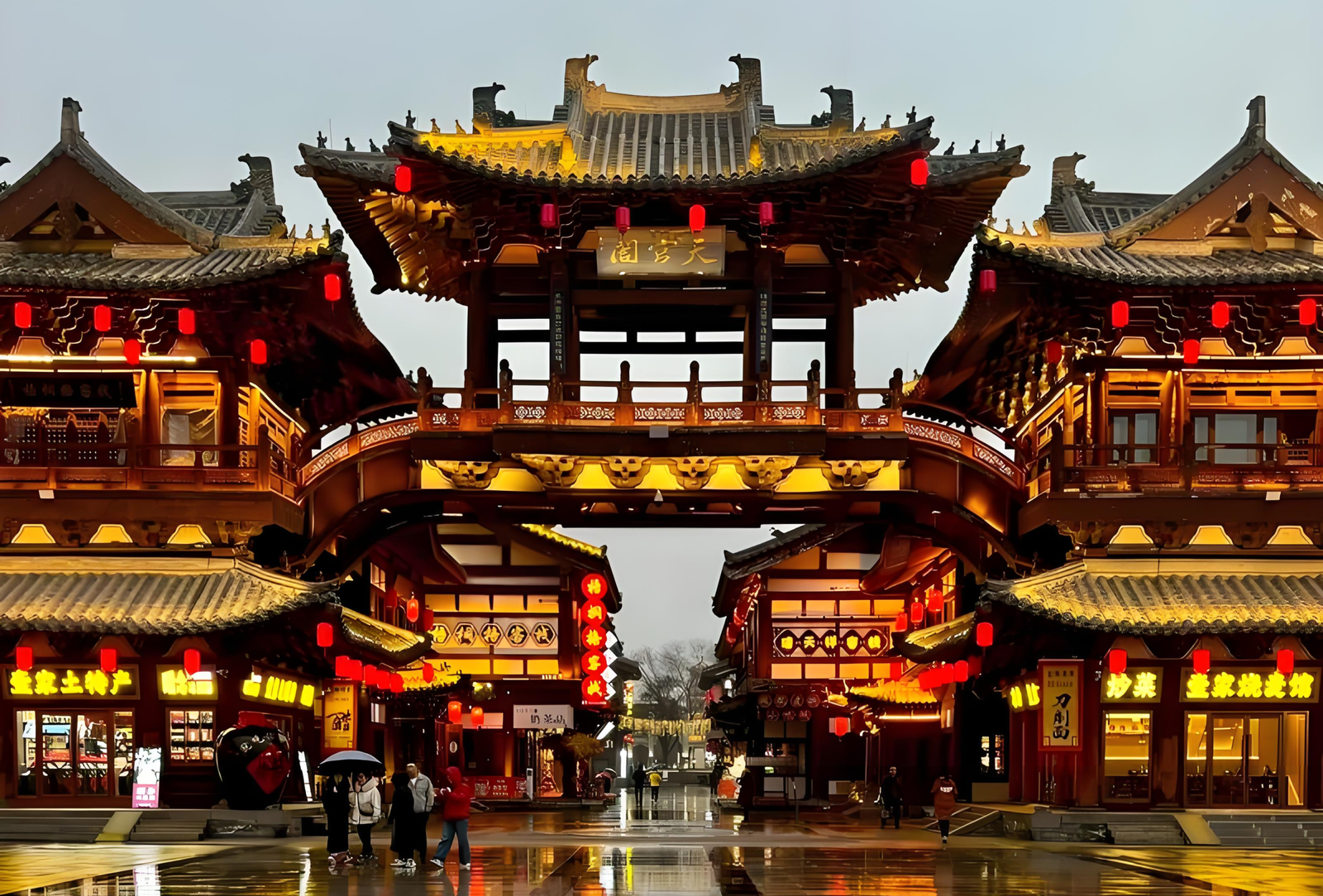
Covering 3.28 square kilometers, encircled by 7.24 kilometers of fully restored Ming Dynasty ramparts, Datong Ancient City doesn’t just preserve history. It lives inside it. Restaurants steam dumplings in Qing-era courtyards. Buddhist monks chant in timber halls that predate Columbus. The grid of streets beneath your feet follows a pattern laid down when Tang and Song emperors ruled China — and it still makes more sense than your phone’s GPS.
The General, The Wall, and The Empires Beneath
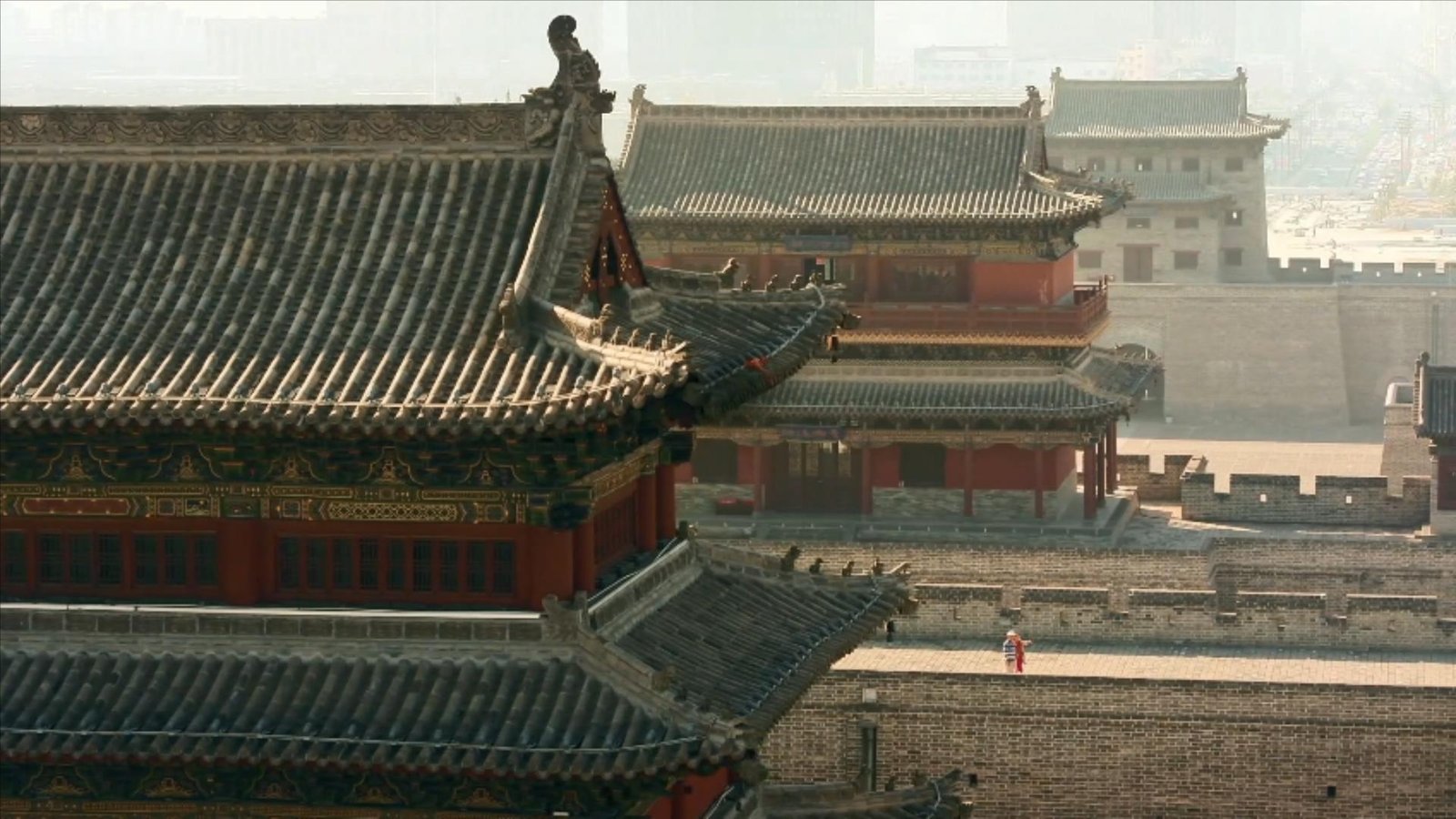
The walls you see today were raised in 1372 by Xu Da, the Ming Dynasty’s greatest general — a man who didn’t do things halfway. Stationed in Datong as military governor, he looked at the crumbling ramparts left behind by four previous dynasties (Northern Wei, Tang, Liao, and Jin) and decided that a strategic city at the edge of empire deserved better. Much better.
What he built was formidable: thick tamped-earth walls faced with brick, massive gate towers at each cardinal direction, watchtowers, bastions, and a moat. For six centuries, this was a fortress city on the frontier — the last major Han Chinese stronghold before the grasslands, where nomadic riders and imperial armies stared at each other across the ramparts.
Today the walls are walkable. You can rent a bicycle and trace the full 7.24-kilometer perimeter, watching the city unfurl below you like a living map — temples, markets, courtyards, and the four great roads converging on a single point.
The Chessboard City
Here’s the elegant trick of Datong’s urban design, and the thing that will save you from ever getting truly lost.
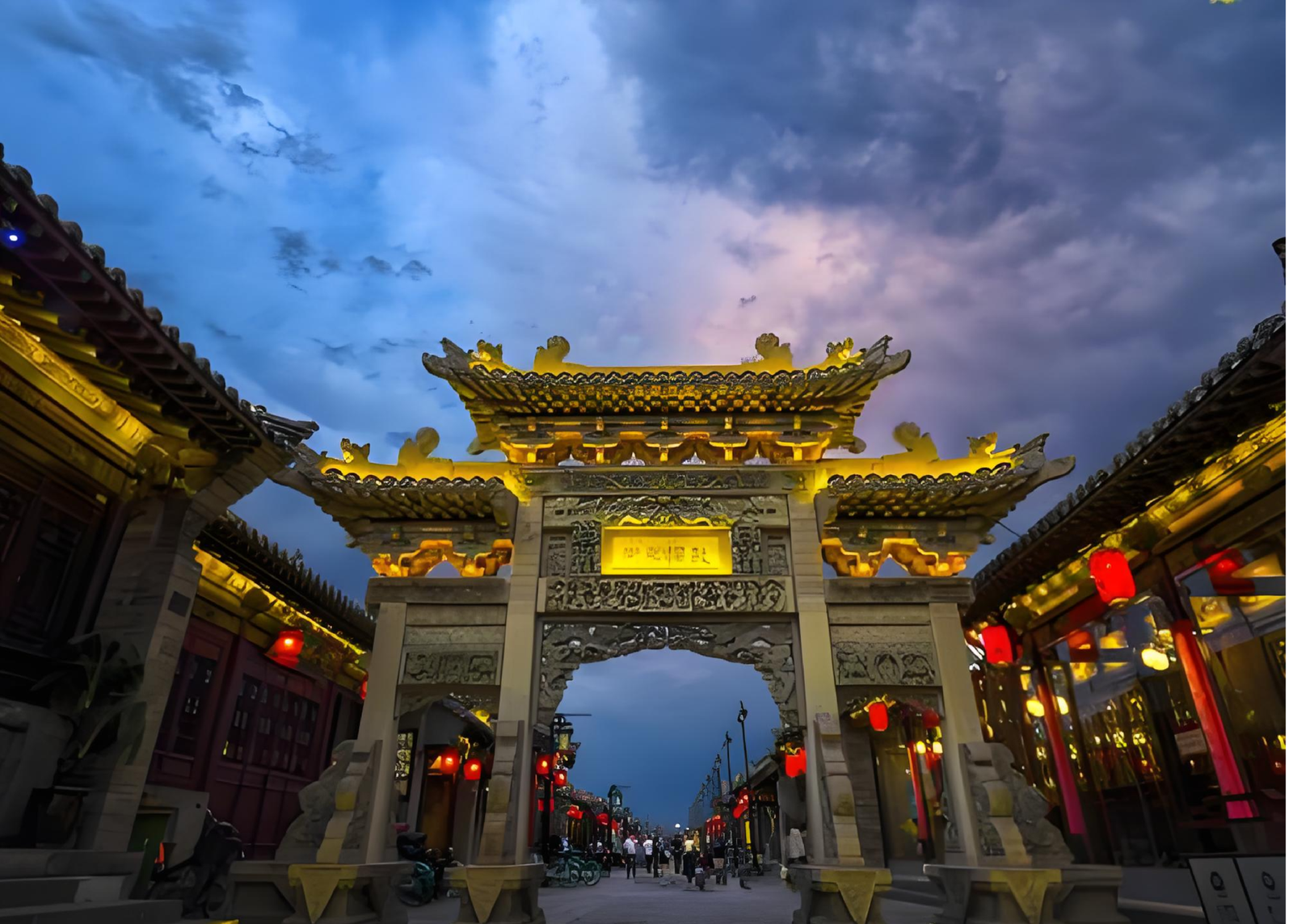
The city was laid out on a strict grid — “like a chessboard,” as Chinese historians describe it — with residential wards, markets, temples, and government compounds each occupying their designated squares. Four main roads radiate from the cardinal gates: Heyang Road (East), Qingyuan Road (West), Yongtai Road (South), and Wuding Road (North). They converge precisely at the city’s geographical and spiritual center: Sipailou, the Four-Archway Building.
Sipailou isn’t just a landmark. It’s the heartbeat. Stand beneath its elaborate timber arches and you’re standing at the crossroads where merchants, officials, pilgrims, and ordinary residents have been meeting since the Tang and Song dynasties. Every road in the old city leads here. So should you.
This layout — born in the Tang, refined in the Song, perfected in the Ming — is one of the best-preserved examples of classical Chinese urban planning still intact. For architecture and history nerds, it’s a living textbook. For everyone else, it means the city is gloriously walkable, intuitively navigable, and full of surprises down every cross-street.
A City of Temples, Mosques, and Secret Courtyards
Datong Ancient City isn’t a single attraction. It’s a constellation.
The grid conceals an astonishing density of sacred and historic architecture. Buddhist temples with thousand-year-old frescoes. A graceful mosque with Chinese-style minarets — a quiet testament to the Silk Road cultures that passed through here. Memorial archways commemorating scholars and virtuous widows. Traditional courtyard homes where families still live behind moon gates and screen walls, their courtyards invisible from the street until a door swings open and reveals a world of carved brick, potted plants, and afternoon tea.
These aren’t sealed-off heritage sites (well, some are). Many are woven into the living fabric of the city. You’ll pass a 500-year-old temple, duck into a modern café, browse an artisan’s workshop in a converted courtyard, then emerge onto a street where lanterns sway above cobblestones and the smell of Shanxi noodles drifts from an open doorway. The city doesn’t separate past from present. It serves them together, like the courses of a banquet.
The temples, mosques, pavilions, and archways “add radiance and beauty to each other” — to borrow the official phrasing, which for once doesn’t oversell it. This isn’t a city that preserved a few landmarks. It preserved an ecosystem.
Modern Comfort, Ancient Bones
Let’s address what savvy travelers actually worry about: will it be a hassle?
Datong Ancient City has invested heavily in tourist infrastructure without turning the place into a theme park. High-quality hotels occupy restored courtyard mansions. Restaurants range from street-side noodle joints (go for the knife-cut noodles — dao xiao mian — dripping in black vinegar) to elegant establishments serving imperial Shanxi cuisine. Shops sell genuine local crafts alongside the inevitable souvenirs. Multilingual signage is widespread. The visitor experience has been designed to international standards — this is a 5A-level destination — but the city itself remains unmistakably, unapologetically real.
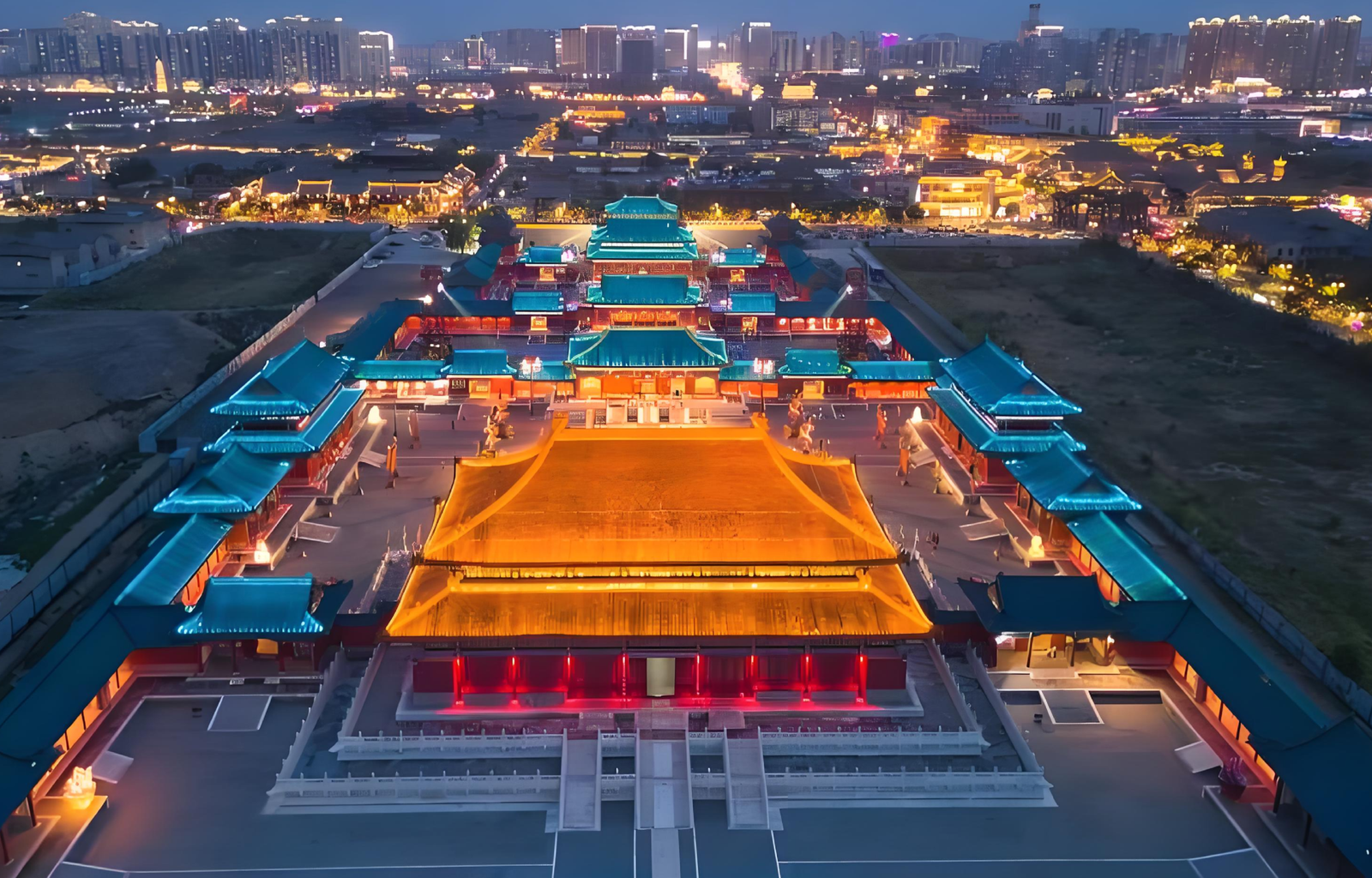
At night, the walls and towers glow with soft lighting. The streets fill with locals and visitors alike. Tea houses, bars, night markets — the city doesn’t shut down at sunset. If anything, it wakes up differently.
The Datong Circuit
You already know the other two pillars:
- Grottes de Yungang — 59,000 Buddhas carved into cliffs, 16 km west. A morning.
- Le mont Hengshan et le temple suspendu — the Northern Holy Mountain and its gravity-defying temple, 60 km southeast. A full day.
- La ville antique de Datong — your base, your evening, your wandering, your meals, your sense of what a living Chinese city actually feels like.
Three nights in Datong gives you a complete circuit. Stay inside the walled city. Explore grottoes and temples by day. Return each evening to walk the ramparts at sunset, eat too much, and let the Four-Archway Building at the city’s heart remind you: some places were designed not just to be inhabited, but to be arrived at.
Comment s'y rendre : Two hours by high-speed train from Beijing West Station. The city walls are visible from the train window as you approach — your first glimpse of what’s coming.
Best time: May–October. Summer evenings on the wall are unforgettable. Winter brings snow on the battlements and thinner crowds.
Inside tip: Rent a bicycle on the city wall and ride the full 7.24-kilometer circuit. It takes about 40 minutes, costs almost nothing, and gives you the best possible orientation to everything below.
Cities are either backdrops or destinations. Datong Ancient City is neither — it’s a doorway. Walk through the eastern gate on Heyang Road, follow the chessboard to Sipailou, and you’ll understand: you didn’t arrive in Datong. Datong arrived in you.

EMBLÉMATIQUE
A fully restored Ming Dynasty walled city spanning 7.2 km — once the imperial capital of the Northern Wei Dynasty, now a living museum where 600-year-old gates frame lantern-lit streets, Liao Dynasty temples, and China’s largest Nine-Dragon Screen.

BUZZ
“Pingyao without the crowds” · “What Xi’an’s city wall wants to be at night” — 4.5+ ratings for its night illuminations and authentic, untouristed atmosphere.

REACH
In the heart of Datong city center — walkable from the train station, free to enter, and the natural evening anchor after a day at Yungang Grottoes and Hanging Temple.

CALENDRIER
Come at dusk — the wall lights up golden against sunset, street food stalls fire up, evening breeze through the towers.

MATCH
Evening strollers, food lovers, history buffs — no fitness barrier, bike rental on the wall, family-friendly, endlessly photogenic after dark.

VALEUR
Wall: free. Temples inside: $5–$10. Street food dinner: under $5. Total cost for this after-dark experience: less than a cocktail in Beijing.