
Yungang Grottoes — Where 59,000 Stone Buddhas Whisper Across 1,500 Years
Datong, Shanxi, China | UNESCO World Heritage since 2001 | National 5A Scenic Area
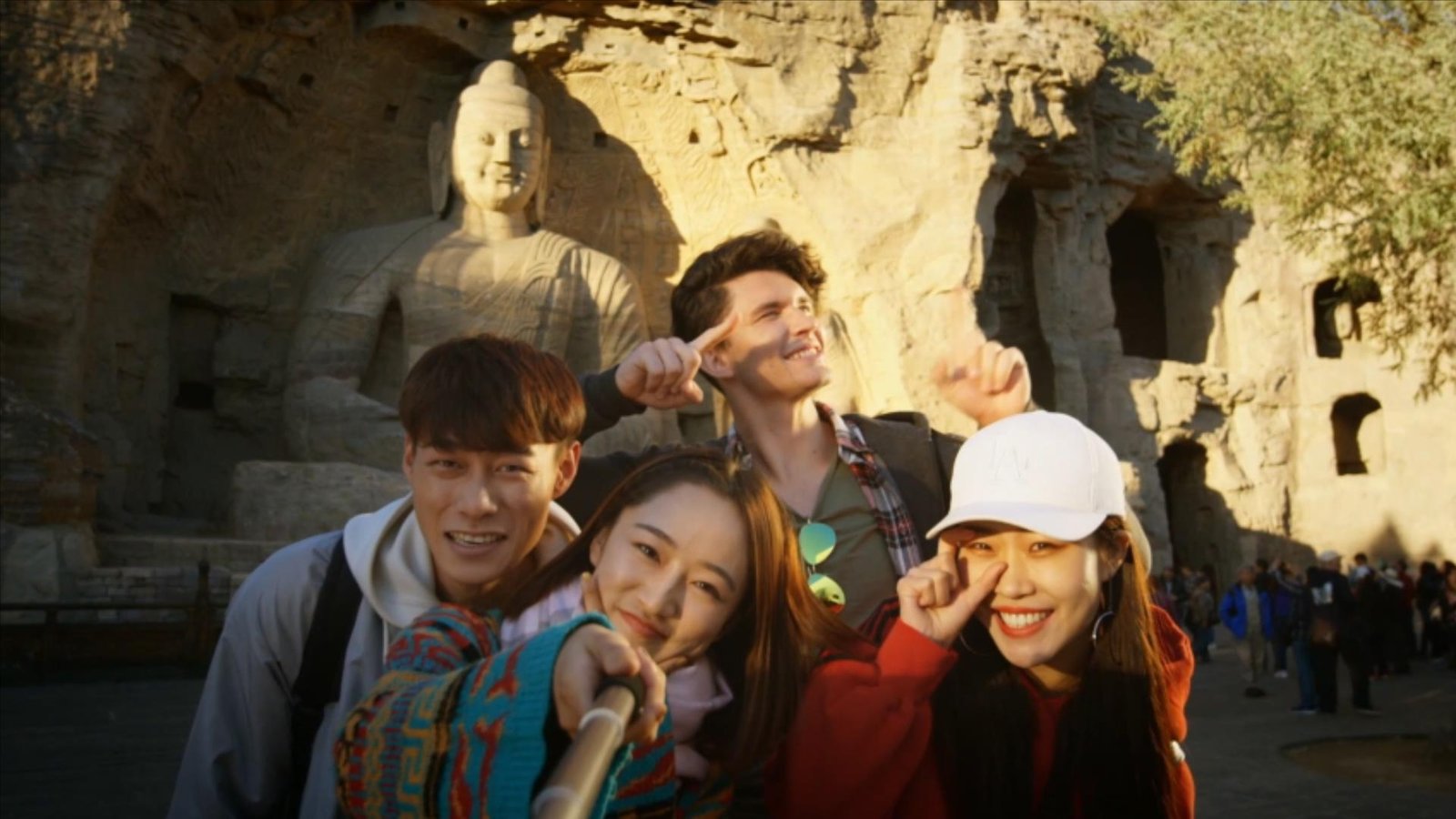
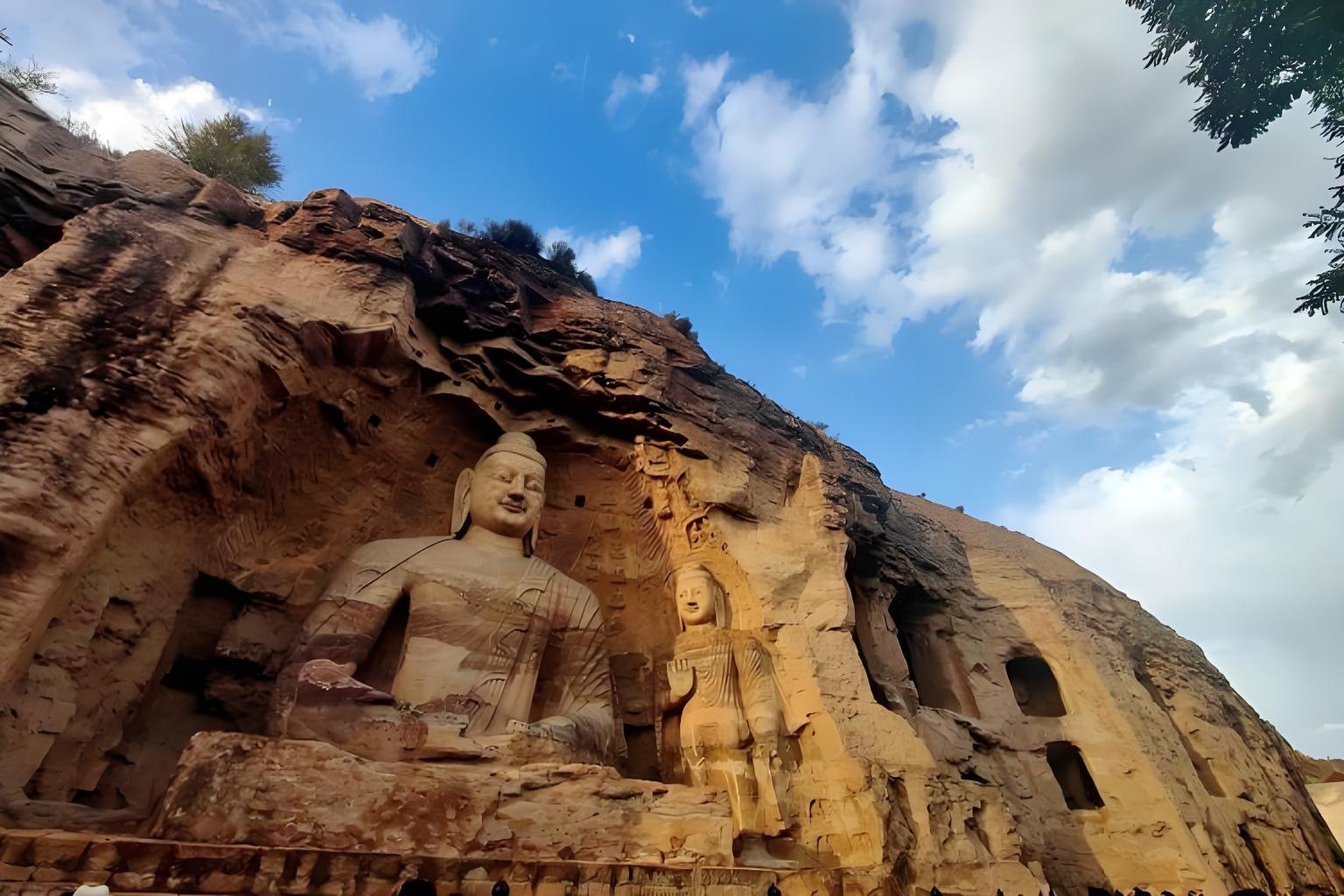
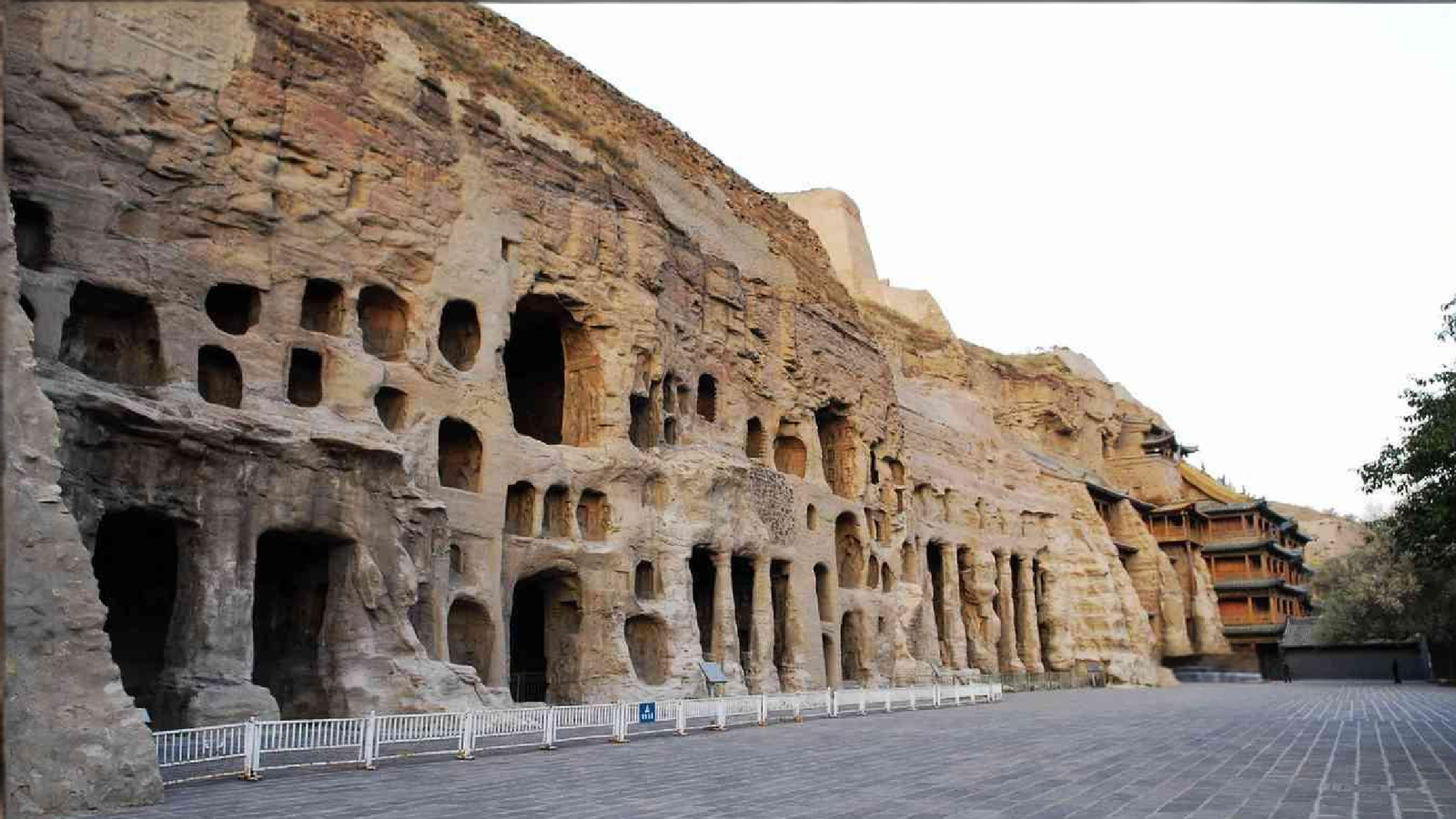
Picture this: you’re standing at the foot of a sandstone cliff that stretches for a full kilometer. Above you, carved straight into the living rock, 45 caves hold 59,000 Buddha statues — some no bigger than your palm, others towering 17 meters high, their serene faces gazing down as they have for fifteen centuries. This isn’t a fever dream. This is Yungang.
A Royal Obsession Carved in Stone
Most wonders of the ancient world were built up. The Yungang Grottoes were carved in.
Commissioned in the 5th century by emperors of the Northern Wei Dynasty — a kingdom founded by the Xianbei, a nomadic people from the northern steppes — this was never a humble village temple. It was a statement. A declaration of faith, power, and artistic ambition on a scale that still defies belief.
Think of it as China’s answer to India’s Ajanta Caves or Afghanistan’s Bamiyan Buddhas. In fact, Yungang stands shoulder-to-shoulder with both as one of the world’s three greatest treasure houses of ancient Buddhist art. Alongside the Mogao Caves of Dunhuang and the Longmen Grottoes of Luoyang, it completes the holy trinity of Chinese cave temples.
East Meets West, Frozen in Sandstone
Here’s what makes Yungang genuinely mind-blowing for the culturally curious traveler: this is where civilizations collided — and became more beautiful for it.
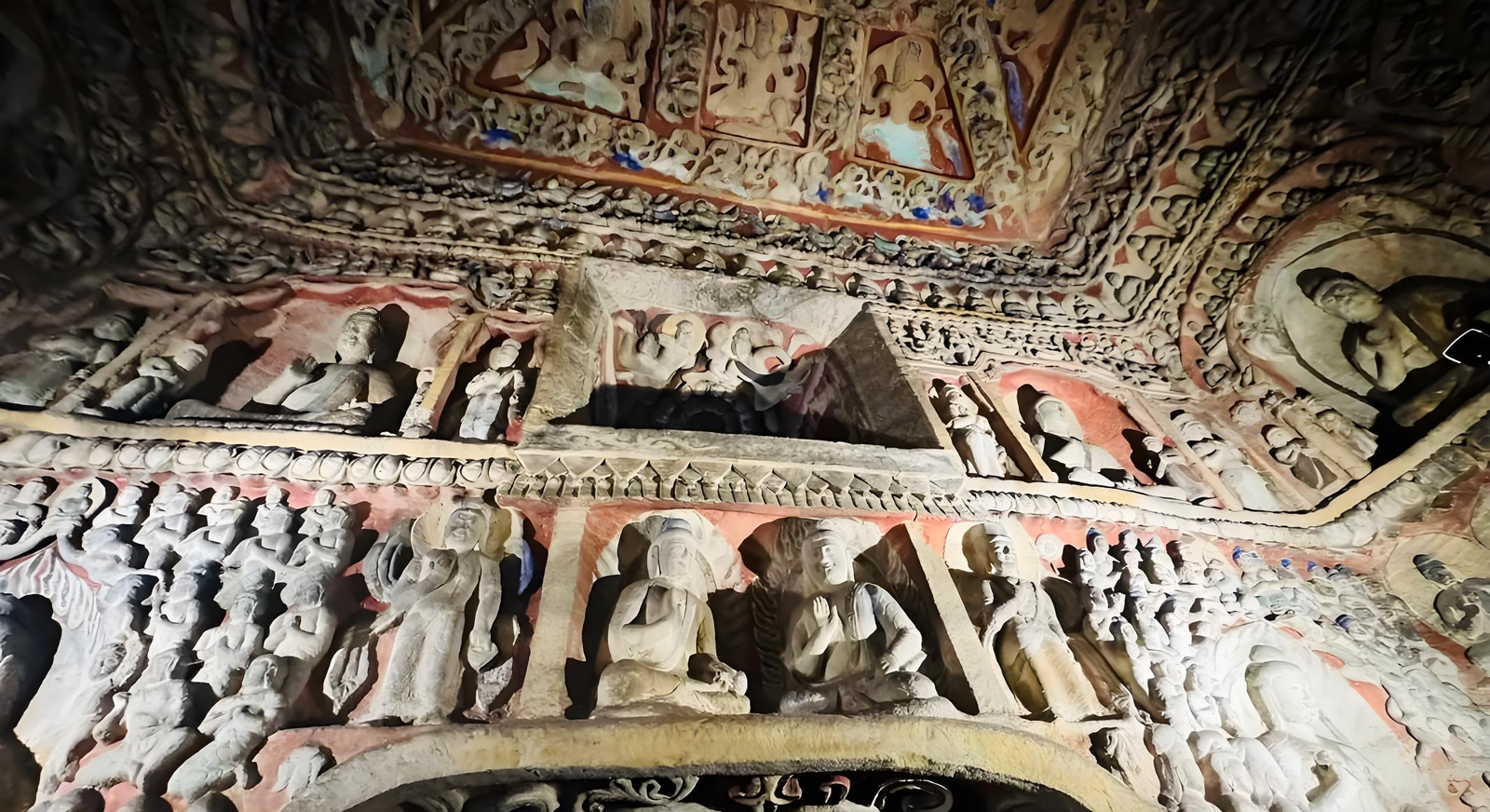
As you walk from cave to cave, you’ll spot Gandharan (Greco-Buddhist) drapery on a bodhisattva’s robe, Central Asian floral motifs curling around a niche, Indian stupa designs framing a Chinese dragon, and Persian-style columns holding up ceilings adorned with celestial musicians. The Silk Road didn’t just pass near Yungang — it poured through it, leaving its DNA in every chisel mark.
The 45 surviving caves contain 254 niches, and no two tell quite the same story. Early caves are vast and austere — the Five Caves of Tanyao, with their colossal Buddhas said to represent five Northern Wei emperors, merging the divine with the political in a way few monuments dare. Later caves grow more intimate, more ornate, exploding with color and detail as the sculptors’ confidence bloomed across generations.
What You’ll Actually Experience
Yungang sits at the southern foot of Wuzhou Mountain, just 16 kilometers west of Datong — an easy day trip. The grottoes stretch roughly one kilometer east to west, and you’ll want at least three to four hours to do them justice.
Don’t miss:
- Cave 5 & 6 — The twin masterpieces. Cave 5 houses the site’s tallest seated Buddha (17 meters, wrapped in a mesmerising carved robe), while Cave 6 is a three-dimensional storybook, its walls covered in 30+ relief panels depicting the Buddha’s life.
- Cave 20 — The iconic open-air Buddha. Part of the cliff collapsed centuries ago, leaving this 13.7-meter giant exposed to the elements. He’s been photographed a million times. He’s still breathtaking.
- Caves 16–20 (Five Caves of Tanyao) — The earliest, boldest, most powerful carvings on the entire mountain. This is where it all began.
- The later caves (21–45) — Smaller, more personal, with exquisite musical and dancer reliefs that feel almost intimate after the colossi.
In 1961, China designated Yungang a Key National Cultural Relic — the very first batch. In 2007, it earned 5A status, the country’s top tourism grade. These aren’t just stamps on a brochure. They mean the site is preserved, interpreted, and accessible at a world-class standard.
Why Visit Now?
Datong is having a moment. Once a gritty coal city, it has transformed into one of northern China’s most underrated travel destinations — excellent high-speed rail links, a beautifully restored ancient city wall, and food (hand-pulled noodles, lamb stews, Shanxi vinegar everything) that will ruin you for airport versions forever.
Yungang itself has a superb modern visitor center, multilingual audio guides, and walkways designed to let you get close without compromising preservation. Early morning on a weekday, with the low sun catching the sandstone just so and only the sound of swallows nesting in the cliff face — that’s when you’ll understand why people have made this pilgrimage for 1,500 years.
And unlike some bucket-list sites, Yungang still has room to breathe. You won’t be elbowing through crowds to see the Buddhas. You’ll have moments of genuine stillness. Use them.
Cómo llegar: ~2 hours by high-speed train from Beijing to Datong, then 30 minutes by taxi or bus. Open year-round. Spring and autumn offer the best light and temperatures.
Some places you visit. Yungang is a place that visits you — and stays.

ICÓNICO
A 1,500-year-old mountain carved into 51,000 Buddhist statues — where Greek, Indian, and Chinese art collided to create one of humanity’s greatest visual masterpieces.

BUZZ
Rated 4.9/5 across TripAdvisor, Lonely Planet, and UNESCO — the world’s most underrated ancient wonder, discovered by every traveler who leaves determined to tell their friends.

REACH
Just 2 hours from Beijing by high-speed rail, then 30 minutes by taxi — with English guides, electric shuttles, and Hanging Monastery as a bonus within the same trip.
TIEMPO
Spring blossoms (April–May) or autumn gold (September–October) transform the weathered stone into something almost transcendent — and both seasons keep crowds thin on weekdays.

PARTIDO
History lovers, photographers, off-the-beaten-path seekers, and anyone who believes the best travel stories aren’t found in guidebooks — all welcome with moderate walking and no prior art degree required.

VALOR
At roughly $18 USD, it costs less than a London dinner — yet delivers a world-class cultural experience that rivals the top museums of Europe, with a fraction of the crowds and none of the markup.