
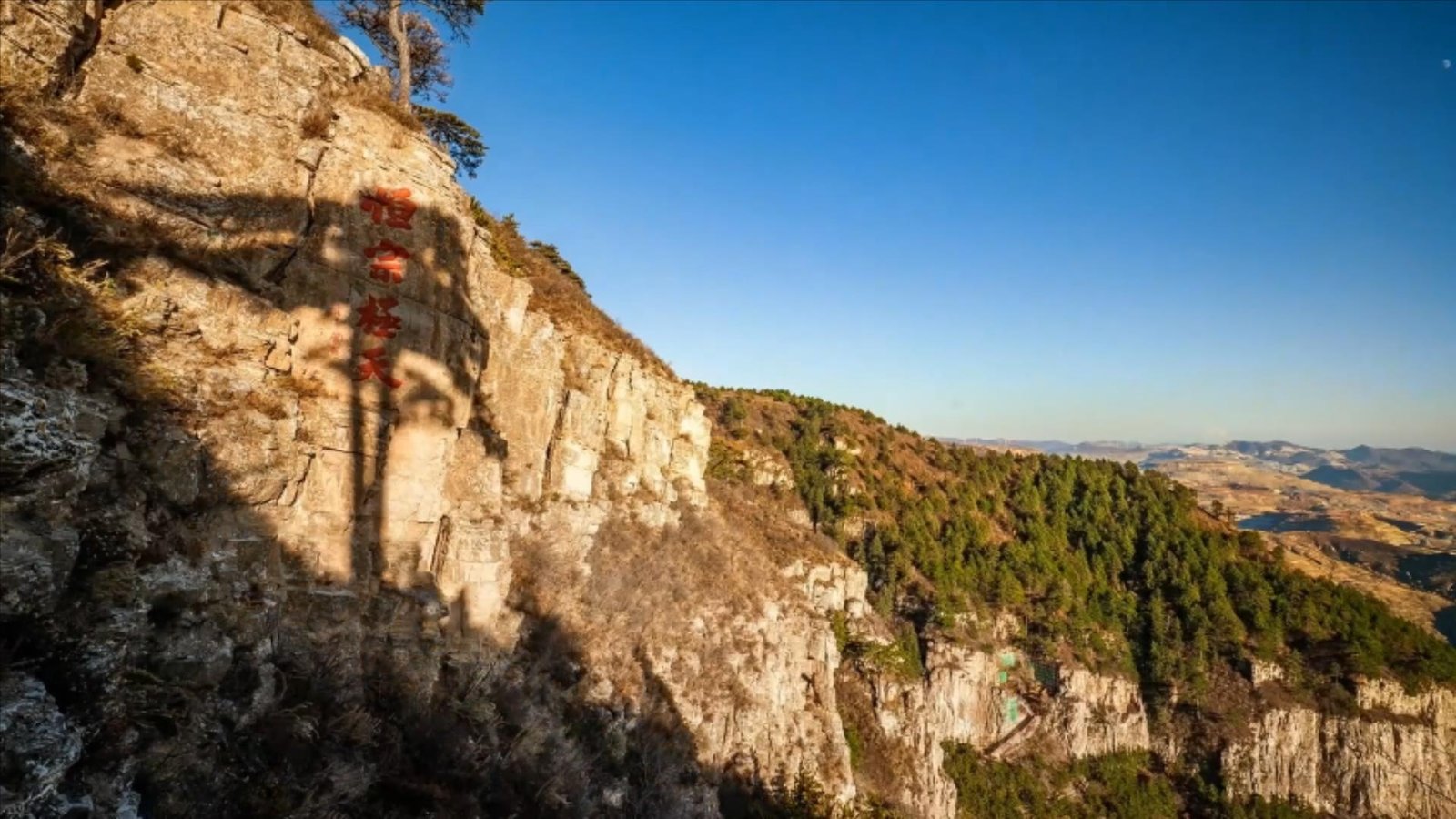
Mount Hengshan — The Northern Holy Mountain Where Taoist Immortals Walked
Shanxi, China | One of China’s Five Sacred Mountains | National Park since 1982 | UNESCO Tentative List
Some mountains are climbed. Some are worshipped. Mount Hengshan demands both.
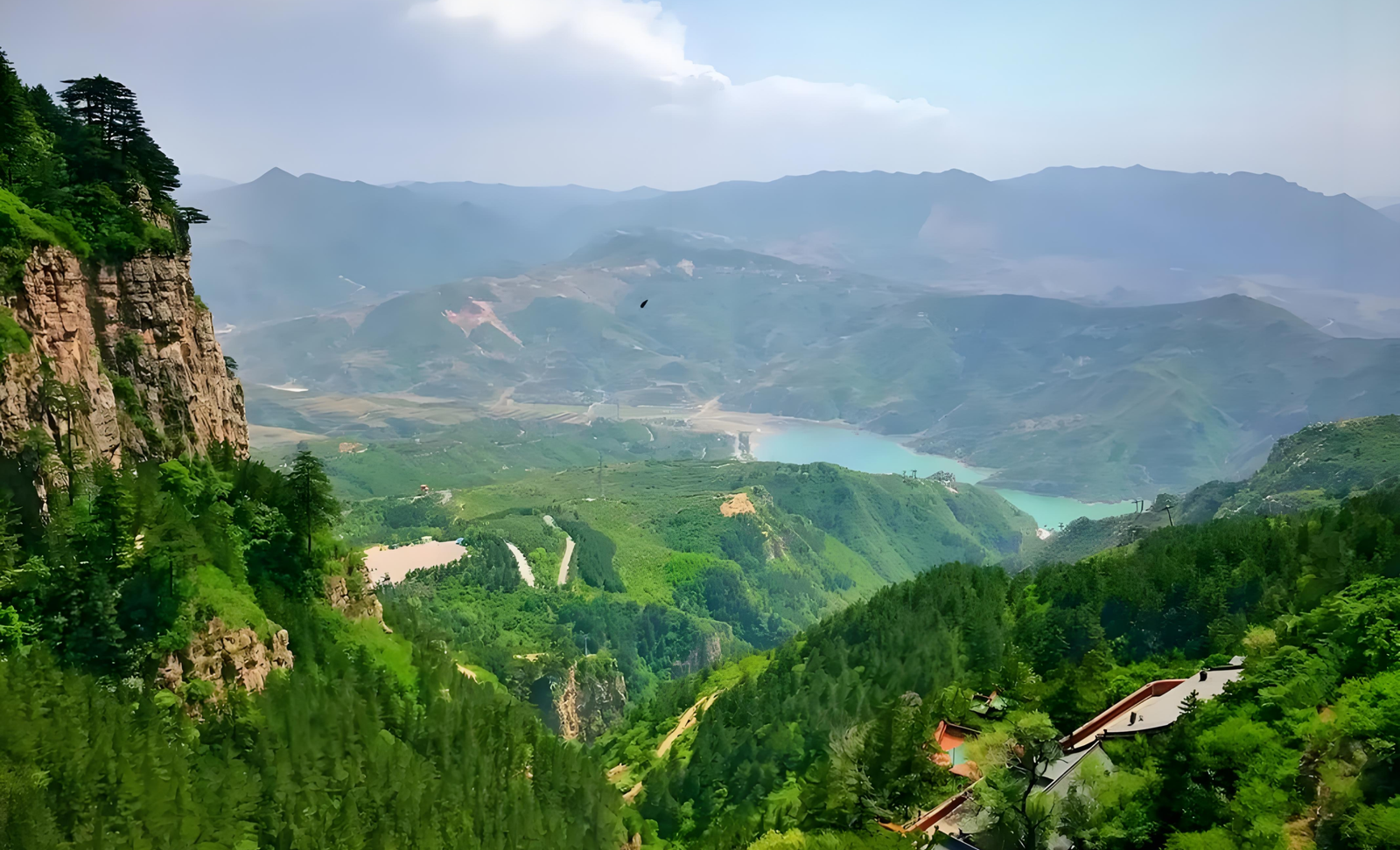
Rising to 2,016 meters above the Shanxi plateau, its peaks tearing into the sky with the kind of vertical drama that makes your neck ache just looking up — this is China’s Northern Holy Mountain, the “towering mountain supporting the heavens,” and a Taoist sanctuary that has drawn pilgrims, poets, and seekers for more than fifteen centuries.
The Mountain That Holds Up the Sky
China’s Five Sacred Mountains are not just geography. They are cosmology. Each guards a cardinal direction: Mount Tai in the east (dawn, birth, renewal), Mount Hua in the west (danger, transcendence), Mount Heng of Hunan in the south (balance, longevity), Mount Song in the center (harmony, the axis of the world). And here, in the north — Mount Hengshan, the anchor, the mountain that the ancients believed literally propped up the firmament.
Its Chinese epithet, “人天北柱” (réntiān běizhù), translates roughly to “the pillar between heaven and earth in the north.” It’s not subtle. Neither is the mountain.
Tianfengling Peak, the summit at 2,016.1 meters, sits just four kilometers south of Hunyuan County. But don’t let the proximity fool you into thinking this is an easy stroll. Mount Hengshan does vertical. Cliffs drop away beneath temple pavilions with the casual indifference of a mountain that has seen dynasties come and go. The peaks don’t roll — they launch.
Taoism’s Northern Throne
For centuries, Mount Hengshan has been one of Taoism’s holiest sites. Not the Taoism of philosophy textbooks — the living, breathing, incense-choked, bell-ringing kind. Hermits built huts here. Sages meditated in its caves. Emperors sent emissaries to make offerings, hoping the mountain’s spiritual power would bless their reigns.
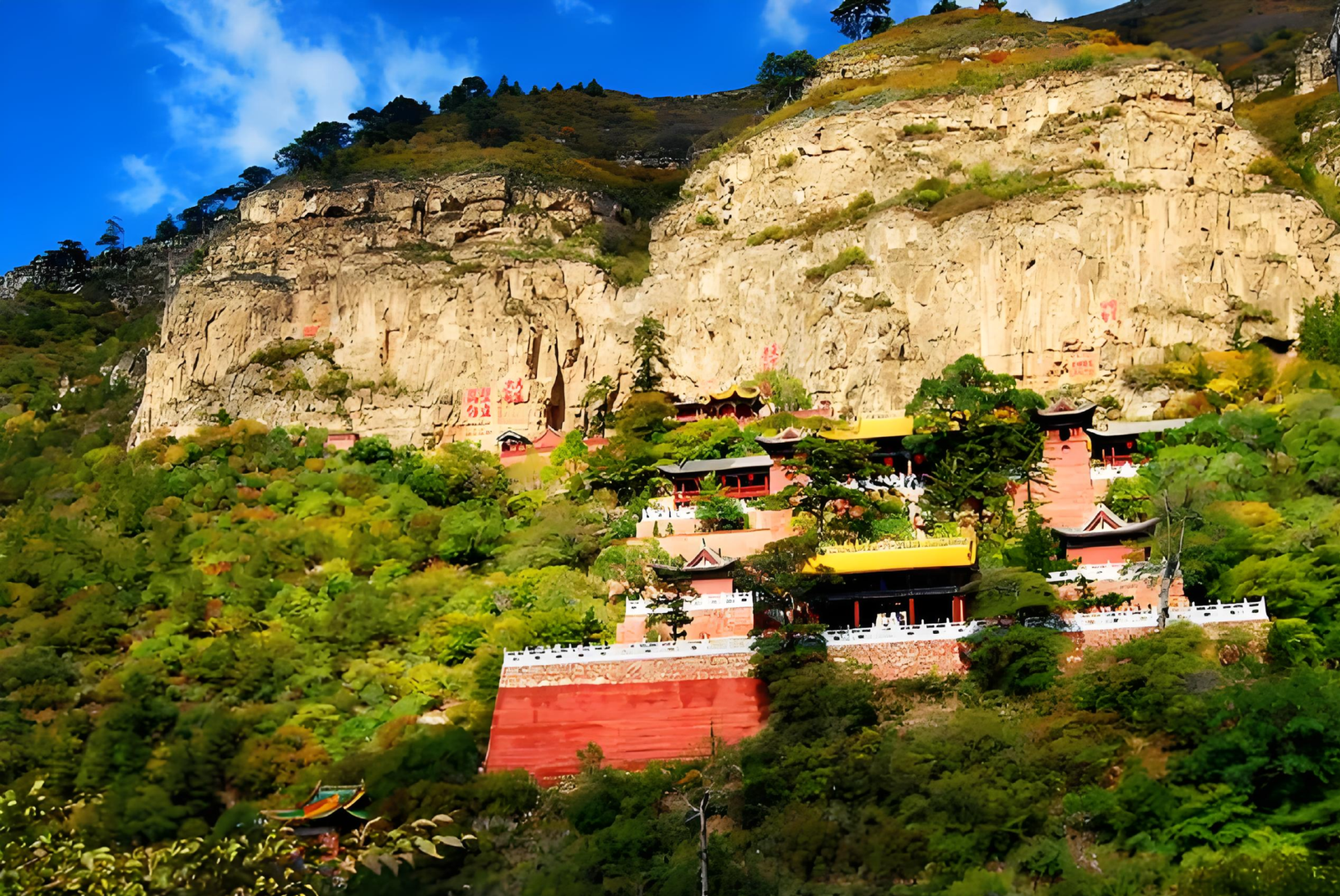
The ancient architecture complex scattered across the mountain dates to the Northern Wei Dynasty (386–534) — the same empire that carved the Yungang Grottoes and launched the Hanging Temple. Most of what you see today was rebuilt and restored through later dynasties, but the placement is original and audacious: temples, pavilions, and shrines pinned to precipices, tucked into cliff hollows, balanced on ridges so narrow you wonder how the builders didn’t fall.
This is not architecture as shelter. This is architecture as dialogue — humanity reaching toward the heavens from the one mountain the heavens already claimed.
What You’ll Actually Experience
Mount Hengshan offers a different rhythm from China’s more famous peaks. It’s less crowded than Hua, less commercial than Tai, less remote than Song. What you get is something rarer: stillness with teeth.
The climb: The ascent is steep but manageable. Well-maintained stone paths and steps wind upward through pine forests, past Taoist shrines with their distinctive curved eaves and weathered inscriptions. You’ll want 3–5 hours depending on your pace and how often you stop (you will stop — the views demand it).
The temples: Unlike single-site temples, Hengshan’s sacred architecture is distributed. Each turn of the path reveals another hall tucked into the rock face, another pavilion cantilevered over a dizzying drop. These aren’t reconstructions dressed up for tourists. They’re working temples with resident monks, burning incense, and the quiet accumulation of centuries in every darkened beam.
Tianfengling Summit: At 2,016.1 meters, the summit delivers what every sacred mountain should — the sensation that you’ve climbed out of the world and into something older. On clear days, the Shanxi plateau stretches to the horizon in every direction, ridgelines folding into each other like crumpled silk.
Multiple trails mean you can choose your adventure. The main route is accessible to anyone with reasonable fitness. Offshoot paths lead to quieter shrines and viewpoints where you might be the only person standing there — a rare gift at a site of this significance.
The Triple Crown of Datong
Mount Hengshan doesn’t exist in isolation. It’s the centerpiece of a perfect northern Shanxi triad:
- The Hanging Temple clings to Hengshan’s own Cuiping Peak — literally halfway up the same mountain. Visit in the morning while the gorge is still cool.
- The Yungang Grottoes, 16 km west of Datong, house 59,000 Buddhas carved into sandstone cliffs.
- Mount Hengshan itself — the summit, the trails, the scattered temples, the long views.
Three UNESCO-recognized wonders, all within a single short trip. Day one: grottoes. Day two: Hanging Temple in the morning, then drive up to the Hengshan trailhead and spend the afternoon on the mountain. Day three: Datong’s ancient city wall and a bowl of hand-pulled noodles before the train home.
In 1982, Hengshan was named one of China’s first National Parks. In 2009, it was added to the UNESCO World Heritage Tentative List alongside the Hanging Temple. These designations confirm what Taoist pilgrims have known for 1,500 years: this mountain belongs to the world.
Inteligencia práctica
Cómo llegar: Two hours by high-speed train from Beijing to Datong, then about 60 km southeast to the mountain. Buses run from Datong to Hunyuan County; taxis or hired cars offer more flexibility.
Las mejores épocas del año: May–June and September–October. Spring brings wildflowers and temperate weather. Autumn sets the mountain on fire with color. Summer can be hot and occasionally crowded. Winter — if you’re brave — transforms Hengshan into a snow-dusted Taoist painting with near-total solitude.
Qué hay que llevar: Proper hiking shoes (those stone steps get slick), layers (mountain microclimates are real), water, and a camera with more storage than you think you’ll need. You’ll need it.
Altitude note: At 2,016 meters, altitude sickness is unlikely, but pace yourself if you’re arriving from sea level.
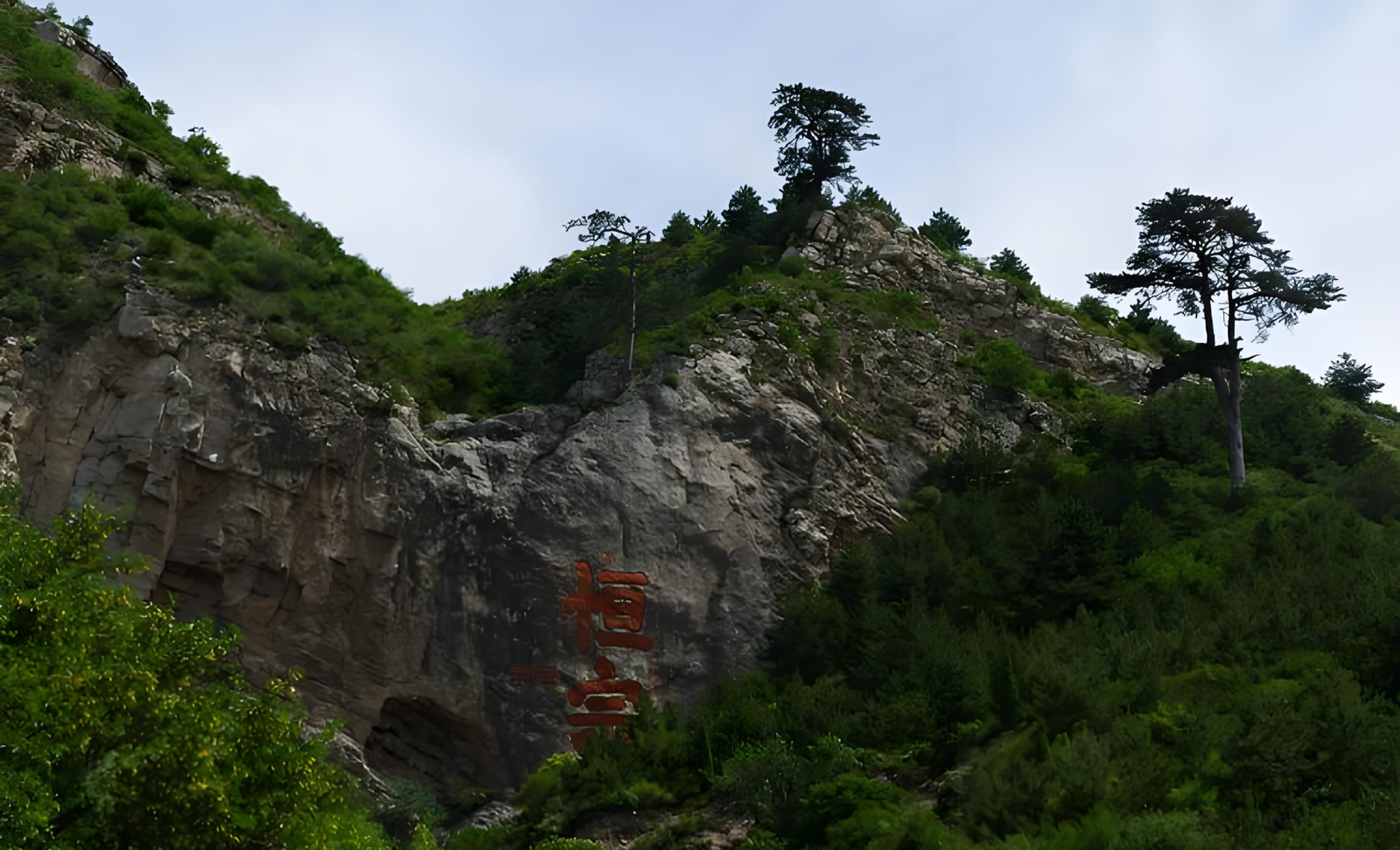
There are mountains you photograph. And then there are mountains that photograph themselves onto you. Hengshan is the second kind — the pillar between earth and sky, where every step upward is a step inward, and the silence at the top is the sound of 1,500 years of prayer settling into stone.

ICÓNICO
One of China’s Five Sacred Mountains — the Northern Holy Peak where emperors came to worship heaven, Taoist immortals are said to have ascended, and 2,000 meters of pine-shrouded cliffs guard a living sanctuary of ancient temples.
BUZZ
A UNESCO Global Geopark and designated National 5A Scenic Area — revered alongside Tai Shan and Hua Shan, yet still a quiet secret outside China, earning the nickname “the sacred mountain the world forgot to visit.”
REACH
60 km from Datong, ~90 minutes by car — sits literally at the foot of the Hanging Temple, making it the second stop on the same road for a seamless three-site Datong pilgrimage.
TIEMPO
Spring wildflowers (May) and autumn foliage (late September–October) deliver the richest colors — avoid the bitter winter winds and icy stone steps from November through March unless you specifically seek snowy peak photography.

PARTIDO
Hikers craving serenity over crowds, Taoist culture enthusiasts, and anyone who wants to climb a sacred mountain without the queues of Tai Shan — moderate fitness required (2–3 hour ascent), cable car available for the less ambitious.

VALOR
Entry plus cable car under $20 USD total — less than a ski lift ticket, for a mountain that emperors once traveled weeks by horse and sedan chair just to bow before.